NGPA GivingTuesday
This GivingTuesday, NGPA is working to raise $35,000 to invest in the future of LGBTQ+ aviation. Through our BUILD. SUPPORT. UNITE. campaign, we're highlighting the people, opportunities, and connections that make our community stronger.
From building opportunities for the next generation to supporting aviation professionals throughout their careers and uniting a community where everyone belongs, your generosity makes a lasting impact.
Every story represents a reason to give. Every contribution helps make the next story possible.
Donate Now
More Than a Scholarship
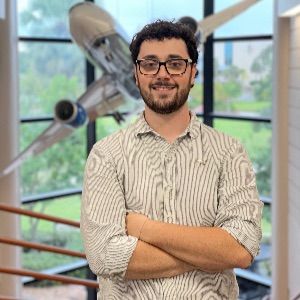
How NGPA's Support Helped Earl Griffin Reach His Dreams
For Earl Griffin, the path to becoming an airline pilot began long before he ever stepped into a flight deck. Growing up just five to ten miles from the runway at Philadelphia International Airport, he spent much of his childhood beneath the constant stream of arriving and departing aircraft. The flight paths overhead became a familiar part of everyday life, but for Earl, they represented something much bigger. He remembers running outside to watch the larger aircraft pass over his house, particularly a British Airways flight arriving from London that he came to recognize by its regular schedule. What began as childhood curiosity gradually developed into an ambition to become an airline pilot.
By the time he was around 12 years old, Earl already knew what he wanted to do, even if he had little understanding of what it would take to get there. A conversation with a pilot during a family vacation helped put his ambitions into perspective. He was encouraged to begin learning about aviation, building flight hours, and preparing for the opportunity to fly on his own. From there, his interest quickly snowballed. A flight simulator on his home computer became an early learning tool, and he began immersing himself in everything he could find about airplanes, aircraft types, and flying.

At 15, Earl found an opportunity that would turn his interest into something tangible: a five-day summer aviation camp at a local airport in New Jersey. The program combined ground instruction with introductory flights, giving him his first meaningful exposure to flight training. His parents asked whether it was something he wanted to pursue. His answer was immediate. "Are you joking? Like, this is it. This is exactly what I want to do." What his parents may have initially viewed as a summer experience became the starting point of a much longer commitment. Earl soloed at 16 and earned his private pilot certificate at 17, before he even had his driver's license.
That early progress, however, did not happen independently. Aviation is an expensive and demanding pursuit, particularly for someone just beginning their career, and Earl's parents played an enormous role in helping him get off the ground. Flight training required regular financial commitments, transportation to an airport nearly half an hour away, and a willingness to invest in a future that was still years from becoming a reality. Earl remembers his parents essentially giving him a blank check each week, trusting him to report back on what he had spent and what he had accomplished. Their support gave him the opportunity to keep flying, but it was only one part of a much larger network of people who helped him along the way.
While attending the summer aviation camp, Earl also began working at the airport as a lifeguard at the facility's uniquely airplane-shaped pool. The job gave him access to discounted flying opportunities and, perhaps more importantly, introduced him to a community of aviation professionals who recognized his enthusiasm. He began washing airplanes, making connections, and finding opportunities to build flight time. One particularly influential relationship was with a young flight instructor who took him along on trips and helped him accumulate hours whenever opportunities arose. Sometimes, what would otherwise have been a short lesson or routine airport visit turned into several hours of valuable flying experience. These relationships helped make an otherwise difficult and expensive path more manageable.
As Earl began considering college and the next stage of his training, someone at the airport suggested he look into an aviation program in New Hampshire. He ultimately enrolled at Daniel Webster College in August 2000, taking another significant step toward his goal of becoming an airline pilot. It was also during this period that he began discovering something that would become just as important to his future as the technical training itself: a community of people who understood what it meant to pursue aviation as an LGBTQ+ individual.
Earl first encountered NGPA through a local chapter known as Out on the Runway, which organized a fly-in at the airport where he worked. At the time, he was not yet out, and the prospect of being involved with an LGBTQ+ aviation organization brought some uncertainty. Nevertheless, seeing gay pilots arrive at the airport in their own aircraft made an impression. It was an introduction to something he had not necessarily imagined was possible: a community of people who shared both his interest in aviation and an important part of his identity.
 His introduction to NGPA became more meaningful once he arrived at college. Although the flight training environment was largely male-dominated, he found the broader educational side of the school somewhat more open-minded. During a diversity event, NGPA made an appearance, giving him another opportunity to learn about the organization. But it was a friendship with an air traffic controller and college alumnus, Michael Giordano, that ultimately brought him into the community. Michael had recently become an NGPA member and encouraged Earl to attend the organization's event in Provincetown, Massachusetts. In 2002, at just 20 years old, Earl made the trip.
What he found there was more than an opportunity to meet other pilots. It was the experience of seeing people who had already achieved the things he was working toward and discovering that they were willing to welcome him into their community. He remembers how members treated him as though he were already one of their own, even though he was still a young student trying to figure out his future. The experience helped transform an airline career from a distant ambition into something he could realistically envision for himself. Instead of wondering whether there was a place for him in the industry, he was suddenly surrounded by people who had already made that place for themselves.
Just one year after joining NGPA, Earl received an NGPA scholarship in 2003. At a time when he was working through the financial demands of flight training and trying to determine how to move his career forward, the scholarship represented a significant turning point. Reflecting on the experience, he previously described it as "a great financial and moral boost after being in a rut." But the scholarship itself was only part of what made his involvement with NGPA so impactful. He continued, "Suddenly I had the best mentors, industry advice, and information at my fingertips."
The scholarship, which was $3,000 helped ease the financial pressure of continuing his education. He still remembers the presentation at an NGPA event in Provincetown, where the organization surprised him with an oversized ceremonial check. His friend Michael was there, along with members of the community who had helped him reach that point. Earl recalls being asked to give a speech, an experience he found challenging but deeply meaningful. His friend was so moved by the moment that he cried. For Earl and his family, the recognition was significant. His parents had invested so much in helping him pursue aviation, and the scholarship was an indication that the effort was beginning to pay off. It was also an opportunity for him to begin taking greater ownership of his future.

As important as the financial assistance was, the relationships he developed through NGPA continued to shape his professional trajectory. At the time, Earl was working toward becoming a certified flight instructor and trying to understand what it would take to move from flight training into the regional airline industry. Through NGPA, he met pilots who had already navigated that transition. They provided practical advice about flight-hour requirements, the experience he needed to gain, and the steps necessary to become competitive for airline positions. He connected with pilots at PSA Airlines, who encouraged him to build his instructional hours, continue flying, and prepare his resume for the next opportunity.
Earl remembers receiving advice and professional assistance that many of his college classmates simply did not have access to. Members were willing to help him understand the process and even offered to personally walk his resume into the airline. Although hiring requirements changed and he ultimately needed to accumulate additional flight time before moving forward, those relationships gave him something invaluable: a clearer understanding of the path ahead and the confidence that he was not navigating it alone. The guidance he received helped turn an overwhelming career objective into a series of achievable steps.
That support continued even after Earl entered the airline industry. One particularly memorable example came during his initial operating experience at PSA Airlines. He had briefly met another NGPA member, Steve Dunn, at an event and later discovered that they could potentially be paired together for a training trip. Earl's first experience flying with an instructor had been intimidating, particularly as he transitioned from smaller training aircraft into a 50-seat regional jet with passengers onboard. His next trip, however, was with someone he already knew through NGPA. The difference was immediate. Knowing he was flying with another member gave him the confidence to focus on becoming a pilot rather than worrying about whether he would feel comfortable in the environment. He and Steve would go on to fly together again later in their careers, including during Earl's time flying at American Airlines.
 For Earl, these experiences illustrate why organizations like NGPA remain important, even as the aviation industry continues to evolve. The technical demands of becoming a pilot are substantial, but the professional and personal challenges can be just as significant. Being part of an industry that can sometimes feel isolating makes it especially important to have a community where people understand your experiences and are willing to help you succeed. Today, Earl sees that same sense of community in the Charlotte area, where numerous American and PSA pilots are involved in the local NGPA chapter. Whether it is finding someone to fly with, seeking career advice, or simply knowing there are people who understand your journey, that network continues to matter.
The support Earl received also inspired him to find ways to give back. Although he initially had limited financial resources to contribute, he wanted to do something for the organization that had helped him so much. He began creating original paintings for NGPA's fundraising auctions, starting with an image of the Provincetown monument and an airplane flying overhead. What began as a personal creative contribution eventually became something members looked forward to each year. Over time, Earl created approximately 10 to 12 paintings for NGPA events, including pieces for Palm Springs. Some sold for nearly $1,000, with the proceeds returning to the organization's education fund. In a particularly meaningful way, he was able to give back the support he had once received, one painting at a time.
Today, Earl is flying the Boeing 777 for American Airlines, a career milestone that once seemed impossibly far away to the teenager watching international flights pass over his childhood home. Looking back, he recognizes just how quickly the years have passed. From his first experiences at the airport to college, flight instruction, regional airlines, and ultimately a position flying long-haul international routes, every stage contributed to the pilot he has become. Yet he is not finished setting goals. He still looks toward opportunities to advance his career, explore new destinations, and continue growing as a professional. His advice to those just beginning their aviation journeys is to avoid becoming so focused on the distant destination that they forget to appreciate the experiences along the way. "Don't constantly focus on the goal that's five, 10, 20 years out," he says. "Try to enjoy the journey."

Earl's story is a powerful reminder that support does not end when a scholarship check is presented or a membership is established. It is found in the instructor who helps a young student build flight hours, the mentor who explains how to navigate the airline hiring process, the member who makes an intimidating training experience more comfortable, and the community that makes someone feel they belong. Each of those moments can have a lasting impact, often in ways that are not immediately visible.
When asked why it is important for organizations like NGPA to exist, Earl returned to the experiences that shaped his own career. He pointed to three things: community, professional connections, and the reassurance of knowing you are not alone. All three helped him move from an aspiring young pilot to an established airline professional, and all three remain central to NGPA's mission.
For those considering a contribution this GivingTuesday, Earl hopes they understand what their support makes possible. A donation is not simply helping someone pay for a portion of their training. It is helping create the opportunity for someone to take the next step toward a future they may have spent years imagining. As he explained, members' contributions provide "that bridge" between having a goal and being able to make it a reality. What may seem like an ordinary part of everyday life to an established airline pilot can represent everything to someone still working toward that first professional opportunity.
Earl knows that difference firsthand. In 2003, NGPA members helped provide the financial and personal support that allowed him to continue pursuing his dream. More than two decades later, he is flying one of the world's most recognizable commercial aircraft and has spent years giving back to the same community that helped him get there. His journey demonstrates that when members support one another, the impact can extend far beyond a single scholarship recipient. It can shape a career, build lifelong relationships, and create opportunities that continue to inspire the next generation of LGBTQ+ aviation professionals.
This GivingTuesday, supporting NGPA means helping make those opportunities possible. Because sometimes, all someone needs is the support to take the next step. And that next step can change everything.